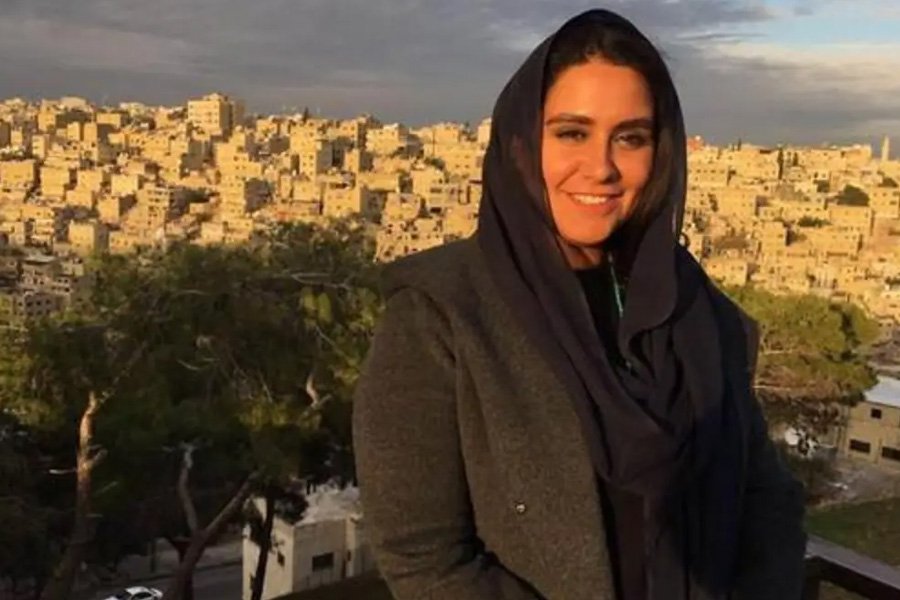
A life shaped by inheritance and confusion
I keep coming back to the strange force of names. Some names open doors. Some names close them. And some names, like Miriam Bin Laden, seem to do both at once. They carry weight before a person has spoken a single word. They invite speculation, projection, fear, curiosity, and sometimes plain confusion. In this case, the confusion matters. The public conversation around Miriam Bin Laden is tangled with another closely related name, Mariam Saleh Binladen, and the result is a kind of paper fog. You can see the outline of a person, but the details shift as soon as you move closer.
That shifting outline is part of the story. It tells us less about gossip and more about how public identity works when family history is so enormous that it bends every nearby shadow. A surname can behave like gravity. It pulls headlines, assumptions, and myths into its orbit. For Miriam Bin Laden, the name itself seems to have become a stage on which different narratives compete.
Why the public keeps blending identities
The most useful thing I can do here is separate signal from static. The article you provided tries to present Miriam Bin Laden as a private figure linked to a notorious family line, while also hinting at an endurance swimmer with humanitarian work. That blend creates a false simplicity. Real public identities are rarely that tidy. Sometimes two different lives get fused because the names are similar. Sometimes the internet prefers a dramatic shortcut over a careful distinction. Sometimes a family name becomes a magnet for unrelated stories that share only a few letters and a shared sense of intrigue.
This is where the real article opportunity begins. Instead of repeating the old frame, I want to look at what the confusion reveals. It reveals how quickly a person can be reduced to a label. It reveals how a family name can overshadow professional work. It reveals how online biographies can behave like mirrors in a funhouse, reflecting fragments of truth but stretching them into something unstable.
I think that is the deeper story around Miriam Bin Laden. Not just who she is, but how identity survives when the world keeps trying to edit it.
The burden of a famous surname
There are family names that are carried like heirlooms, polished and displayed. Then there are family names that feel like heavy keys in a pocket, always present, always reminding the wearer of a locked room somewhere behind them. Bin Laden is clearly in the second category. It is a name that evokes history before it evokes family, and fear before it evokes biography.
For anyone connected to that lineage, privacy is not merely a preference. It becomes a form of shelter. The ordinary acts of life, education, work, travel, friendship, and marriage can all become distorted under public glare. A person can be introduced to the world as a footnote to someone else’s legacy. That is a harsh inheritance. It asks the person to carry a story they did not write, while the world keeps demanding a response.
Miriam Bin Laden, at least as she appears in the public conversation, stands at that pressure point. Even when the details are sparse, the emotional architecture is clear. There is the expectation of explanation. There is the temptation to search for redemption, distance, or reinvention. There is also the right not to perform any of those things. That tension is what makes the subject worth exploring. It is not just biography. It is the anatomy of reputation.
Humanitarian work and the search for a separate voice
One of the most compelling threads associated with Miriam Bin Laden is the idea of service. Humanitarian work changes the tone of a public life. It is quieter than spectacle, but often more enduring. It is less like fireworks and more like a lantern carried through fog. When a person tied to a controversial family history engages in relief work, the gesture is never interpreted innocently. People ask whether the work is sincere, strategic, symbolic, or all three.
I find that question less interesting than the work itself. Humanitarian action does not become less real because the public is skeptical. In some cases, the skepticism is exactly what makes the work more meaningful. It means the person is attempting to speak in a language the world can verify through action rather than ancestry.
That matters when we talk about Miriam Bin Laden because the article hints at a life lived away from the spotlight, possibly with a focus on service rather than celebrity. In a culture that often rewards noise, that kind of quiet commitment can be easy to miss. Yet it is often the clearest sign that someone is trying to shape a life that is not merely inherited, but chosen.
The endurance swimmer angle and what it symbolizes
The swimmer connection gives the story another layer. Endurance swimming is not casual athleticism. It is a conversation with cold water, fatigue, distance, and doubt. It is the body making a promise the mind must keep renewing. That is why the image sticks. Whether people are thinking about Mariam Saleh Binladen or another closely related identity, the symbolism is powerful.
Swimming long distances can feel like a moral metaphor. Each stroke is an argument against surrender. Each mile says that breath can be rationed, fear can be managed, and a line can be crossed even when the horizon looks indifferent. In a story like this, that image matters because it suggests a life of resistance, patience, and personal direction.
If Miriam Bin Laden is part of that story, then the most interesting angle is not celebrity. It is transformation. The open water becomes a place where a name no longer dictates the whole script. The body writes its own chapter. The ocean does not care about family trees. It only asks whether the swimmer will continue.
The digital age and the problem of inherited narratives
I also think this story belongs to a larger modern problem. We live in a time when a single name can be stitched together from old articles, reposted captions, half-verified profiles, and blurred references. A person can become searchable long before they become knowable. That is especially true for someone connected to a globally infamous family. The internet does not wait for certainty. It prefers a clickable shape.
That is why careful writing matters here. It is easy to repeat a claim just because it has been repeated before. It is harder to notice when two identities have been fused. It is harder still to admit uncertainty without stripping the story of interest. But uncertainty is not emptiness. Sometimes it is the honest frame around a complicated life.
Miriam Bin Laden sits inside that frame. The available picture suggests family tension, privacy, public curiosity, and possibly a separate professional life shaped by endurance and service. What it does not suggest is a simple headline. And maybe that is the point. Some lives resist compression.
The meaning of distance, from family and from fame
Distance appears again and again in stories like this. Distance from fame. Distance from scandal. Distance from inherited language. Distance from the version of the self that other people keep trying to assign. I think distance can be a form of authorship. It gives a person room to decide which parts of the family story are relevant, which parts are noise, and which parts should stay locked away.
That is why the name Miriam Bin Laden continues to attract attention. It sits at the edge of several larger questions. Can a person outgrow the story attached to a surname? Can public service soften a legacy without erasing it? Can private life remain private in an era that treats biography like a public commodity? I do not think those questions have neat answers. But the questions themselves are the real material.
FAQ
Who is Miriam Bin Laden?
Miriam Bin Laden is a name associated in public discussion with the Bin Laden family and with questions of private identity, public perception, and possible humanitarian or athletic work. The name is often confused with Mariam Saleh Binladen, which adds to the uncertainty around the available biography.
Why is there confusion between Miriam Bin Laden and Mariam Saleh Binladen?
The confusion comes from the similarity of the names and from overlapping public references tied to family background and endurance swimming. In online spaces, similar names are often blended into one narrative even when the underlying identities may not be identical.
What is the most interesting angle in this story?
The most interesting angle is how a person lives with a surname that carries immense historical weight while trying to build a separate identity. That tension between inheritance and self-definition is more revealing than any single headline.
Does the article suggest a humanitarian dimension?
Yes. The public conversation around Miriam Bin Laden includes references to humanitarian work, which adds another layer to the story. It suggests a life that may be oriented toward service, not just family history.
Why does the endurance swimming detail matter?
Endurance swimming is symbolically powerful because it represents discipline, resilience, and personal control. In a story shaped by public scrutiny, it becomes a vivid metaphor for moving through difficult water without losing direction.
What should readers take away from the name Miriam Bin Laden?
Readers should see the name as more than a provocative label. It points to the way legacy, privacy, identity, and public myth can collide. The real story is not just about a surname. It is about the struggle to be seen as a person rather than a headline.